How to Change Units in SOLIDWORKS
Contents
You can change units in SOLIDWORKS from the document unit settings. This controls how dimensions, mass properties, measurements, and drawings display values in the active part, assembly, or drawing.

Change document units
- Open the part, assembly, or drawing.
- Go to Tools > Options.
- Open the Document Properties tab.
- Select Units.
- Choose the unit system, such as IPS, MMGS, CGS, or MKS.
- Set precision and dual-unit options if needed.
Use the status bar shortcut
You can also change units from the lower-right status bar in many SOLIDWORKS documents. This is faster for quick changes, but still review document properties when precision, fractions, or dual dimensions matter.
The shortcut is helpful during modeling, but templates are better for long-term consistency. If every new part opens in the wrong unit system, update the template rather than changing each file manually.
Check mass properties and measurements
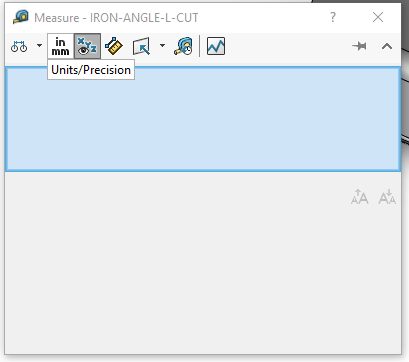
Changing units affects displayed values in tools such as Measure and Mass Properties. After changing units, confirm that length, mass, volume, and density values are shown in the expected system.
Changing displayed units does not automatically resize the model. A 25.4 mm part and a 1 inch part can represent the same size, depending on how the dimensions were created and interpreted.
Use dual units when needed
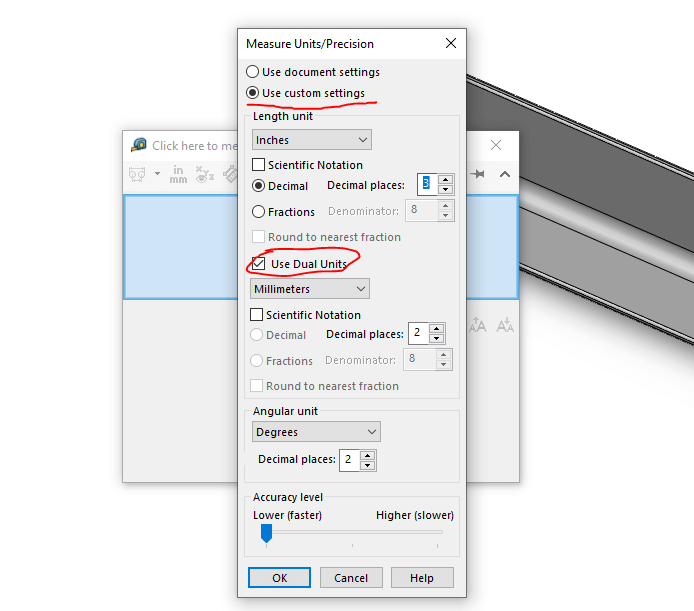
Dual units can show two unit systems at the same time, such as inches and millimeters. This is useful for customer drawings, vendor communication, or projects that cross metric and inch workflows.
Use dual units carefully on crowded drawings. They add useful clarity when required, but they can also make dimensions longer and harder to place.
Set precision with the units
Unit precision controls how many decimal places or fractional values appear. Choose precision that matches the design requirement. Too many decimals can imply accuracy that the part does not need, while too few can hide important tolerance information.
Save units in templates
If you always start new files in the same units, save the setting in your part, assembly, or drawing template. That prevents repeated unit changes and keeps new documents consistent.
Templates can also store dimension precision, drafting standard, and default document properties. This is the best place to control units for a team.
Troubleshooting
If dimensions still look wrong, check whether they use document units or overridden dimension settings. For drawings, also check the drawing template and dimension standard.
If imported files arrive at the wrong scale, check import units separately. That problem is different from simply changing how SOLIDWORKS displays dimensions.
For shared projects, document the expected unit system in the drawing or project notes so other users do not model related parts in the wrong units.


