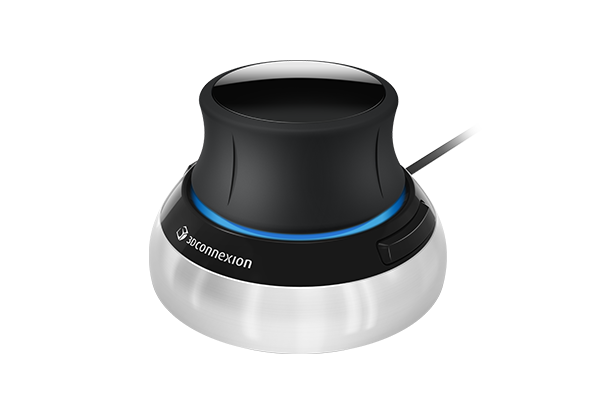
Best Keyboard for CAD
Disclosure: this page may include affiliate links. If you buy through those links, Mechanitec may earn a commission at no extra cost to you.
A good CAD keyboard is less about being labeled “for CAD” and more about fitting the way you work. For SolidWorks, AutoCAD, Inventor, Fusion, and similar tools, the useful features are a reliable numpad, comfortable typing, shortcut-friendly layout, programmable keys, and enough desk space for your mouse, tablet, or SpaceMouse.
If the SpaceMouse is the part of the desk you are still choosing, use the SpaceMouse buying guide to compare compact, wireless, Pro, and Enterprise-style controllers.
If you enter dimensions all day, a full-size keyboard or separate numpad matters. If you rely heavily on shortcuts, programmable keys can help. If your desk is crowded with a CAD mouse and 3D controller, a compact keyboard with a detached numpad may be more comfortable than a wide board.
When the keyboard will sit beside a docked notebook, start by choosing a laptop for AutoCAD that gives you enough ports, RAM, and screen quality for the way you draft.
This guide focuses on practical CAD workstation fit: number entry, command access, desk width, function keys, key feel, and how the keyboard works beside a mouse or 3D navigation device. A keyboard can be excellent for gaming or typing and still be the wrong choice for CAD if it hides keys, pushes the mouse too far away, or makes repeated dimension entry slower.
Desk fit also depends on the display, so compare monitors for SolidWorks before choosing a wide keyboard, separate numpad, monitor arm, or docked laptop layout.
For 2D drafting desks, a monitor for AutoCAD can be the better display comparison because palettes, layouts, PDFs, and line clarity drive the setup.
Quick Picks by CAD Workflow
| CAD workflow | Best keyboard type | Why it helps | Watch out for |
|---|---|---|---|
| Full-time CAD with many shortcuts | CAD-focused programmable keyboard | Programmable app-specific keys can put frequent commands closer to your hands. | Niche keyboards cost more and may not be necessary if you already use normal shortcuts well. |
| Dimension-heavy drafting and modeling | Full-size keyboard or separate numpad | A numpad is useful for repeated dimensions, coordinates, quantities, and drawing notes. | Full-size keyboards take more desk space beside a CAD mouse or SpaceMouse. |
| CAD plus office productivity | Productivity keyboard | Comfortable typing, backlighting, multi-device support, and software customization help across CAD, email, spreadsheets, and documentation. | Low-profile scissor switches may not satisfy users who prefer mechanical feedback. |
| Shortcut-heavy power user | Mechanical keyboard with macro support | Macros and programmable layers can speed up repetitive CAD commands, view changes, and documentation tasks. | Software complexity and loud switches can become annoying in an office. |
| Small desk with mouse or SpaceMouse | Compact keyboard plus detached numpad | A narrower keyboard lets the mouse sit closer to your shoulder, which can feel better during long CAD sessions. | Compact layouts can hide function keys or navigation keys behind layers. |
Product Comparison
Use these links as starting points for comparing current options. Availability and exact models can change, so check the current listing details before buying.
| Product | Best fit | Primary reason to consider it | Amazon link |
|---|---|---|---|
| 3Dconnexion Keyboard Pro with Numpad | Shortcut-heavy CAD and 3D design workflows | CAD-focused keyboard with a separate programmable numpad. | |
| Logitech MX Keys S | CAD plus email, spreadsheets, documentation, and browser work | Quiet productivity keyboard with backlighting and app profiles. | |
| Logitech MX Keys S Combo | Users replacing the full keyboard and mouse setup together | Matched productivity keyboard and mouse bundle for a clean workstation. | |
| 3Dconnexion Numpad Pro | Compact keyboard users who still enter dimensions constantly | Detached numpad for flexible placement on a CAD desk. | |
| Incase Ergonomic Keyboard | Users who prefer a split or curved ergonomic layout | Comfort-focused shape for long typing and documentation sessions. | |
| Perixx PERIBOARD-512B | Budget ergonomic workstation setup | Affordable split layout with a full-size key arrangement. |
Recommended CAD Keyboard Picks
3Dconnexion Keyboard Pro with Numpad

The 3Dconnexion Keyboard Pro with Numpad is the clearest CAD-focused keyboard in this list. It is designed for professional 3D and CAD workflows rather than general gaming, and the separate numpad is a practical detail for real CAD desks. You can keep number entry close when dimensions matter, move it to the left side, or clear space for the mouse when you are mostly modeling.
This keyboard makes the most sense if you already know which commands you repeat all day. Shortcut-heavy SolidWorks, AutoCAD, Inventor, Fusion, and 3D design users can benefit from a layout that supports application-specific workflow rather than forcing every command through a standard keyboard.
The caution is cost and complexity. If you do not plan to configure shortcuts, a specialty keyboard may be more than you need. If you do configure it, start with common commands such as Escape, Enter, rebuild, view orientation, measure, section view, or drawing-note workflow, then expand only after the first mappings become habit.
Logitech MX Keys S
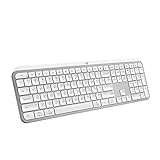
The Logitech MX Keys S is the safest mainstream productivity pick for a CAD workstation where typing, spreadsheets, email, documentation, and browser work matter as much as CAD. It is quiet, familiar, backlit, and easy to live with across a full workday.
For CAD, its strength is not a special CAD label. The useful value is a stable full-size layout, comfortable low-profile typing, predictable function keys, and software support for basic app-specific actions. Designers who move between SolidWorks, Excel, PDFs, quotes, and file systems often benefit more from a reliable productivity keyboard than from a niche board they never configure.
Choose it if you want a clean office keyboard that does not dominate the desk. Skip it if you strongly prefer mechanical switches, a heavy tactile feel, or dedicated macro keys.
Logitech MX Keys S Combo
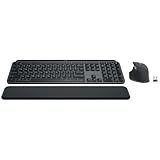
The Logitech MX Keys S Combo is useful when you want to refresh the whole input setup at once instead of buying a keyboard and mouse separately. For CAD users who split their day across modeling, office work, documentation, and remote meetings, a matched productivity combo can make the desk feel more consistent.
The reason to consider a combo is simplicity. You get a keyboard and mouse intended to work together with the same software ecosystem and a similar productivity focus. That can be easier than pairing a random office keyboard with a mouse that needs separate configuration software.
The tradeoff is that a combo is not as specialized as a dedicated CAD mouse plus CAD keyboard setup. If middle-click feel, a true CAD mouse, or a SpaceMouse-style device is the main priority, compare this with the dedicated options in the best mouse for CAD guide before buying.
3Dconnexion Numpad Pro
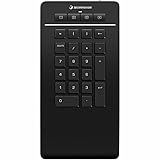
The 3Dconnexion Numpad Pro is not a full keyboard replacement. It belongs in the setup when you like a compact keyboard but still enter numbers constantly. CAD users often need fast dimension entry, coordinates, drawing notes, quantities, and BOM edits. Giving up the numpad entirely can make a clean desk feel slower.
A detached numpad lets you place number entry where it helps most. Some users keep it on the left so the right hand stays on the mouse. Others keep it near the keyboard for dimension-heavy drawing sessions, then move it away when modeling space matters more.
This is the most flexible answer for small desks, large mice, drawing tablets, and SpaceMouse users. It also pairs well with compact keyboards that would otherwise be too narrow for dimension-heavy CAD work.
Incase Ergonomic Keyboard

The Incase Ergonomic Keyboard is a better fit for users who care more about typing posture than macro keys. CAD work is not only modeling. Many engineers and designers spend hours writing notes, editing drawings, preparing quotes, replying to clients, documenting changes, and working in spreadsheets. A more comfortable typing shape can matter if those tasks cause fatigue.
The ergonomic value depends on personal fit. A split or curved layout can reduce awkward wrist angles for some users, but it can also slow down users who rely on fast shortcut combinations until they adapt. Before choosing an ergonomic keyboard for CAD, check that Escape, Delete, function keys, arrows, and the numpad arrangement still match your habits.
Choose this direction if normal rectangular keyboards feel uncomfortable during long sessions. If your priority is CAD command speed, a programmable keyboard or detached numpad may be a better upgrade.
Perixx PERIBOARD-512B
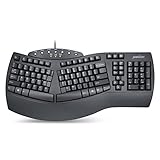
The Perixx PERIBOARD-512B is a budget ergonomic option for users who want a split-style layout without paying for a specialty CAD keyboard. It is not a CAD-specific product, but it can be reasonable for students, occasional CAD users, or office workstations where typing comfort is the main issue.
The advantage is simple: it gives you a full-size ergonomic layout with a numpad at a lower price. That can be useful if you enter dimensions and still want a more relaxed typing angle. The downside is desk width. A full-size ergonomic keyboard can take a lot of space, which may push the mouse farther away.
Choose it only if the shape solves a real comfort problem. For a tight CAD desk, compact keyboard plus detached numpad may be the cleaner workstation layout.
How to Choose a CAD Keyboard
Decide whether you need a numpad
If you enter dimensions constantly, keep a numpad. If you mostly model with mouse gestures and shortcuts, a compact board plus separate numpad may be better because it leaves more room for your mouse or SpaceMouse.
Prioritize shortcut access
CAD work rewards reliable access to common commands, not novelty keys you never configure. If a keyboard has macro keys, decide what they will do before you buy it. The SolidWorks keyboard shortcuts guide is a good place to choose the commands worth memorizing or mapping.
Think about mouse position
A very wide keyboard can push your mouse too far right. This matters during long CAD sessions because the mouse is often used for orbiting, selecting, sketching, and view control. A narrower keyboard can make the desk layout feel more natural. If the mouse is part of the problem, compare options in the CAD mouse guide.
Choose switches for the room you work in
Mechanical switches can feel great, but loud switches may be a poor fit in a shared office. Quiet mechanical, low-profile, or membrane keyboards can be better when noise matters. Logitech’s MX Keys S product page is a useful reference for mainstream productivity features such as low-profile typing, backlighting, and multi-device workflow.
Avoid buying the CAD label alone
The best keyboard is the one that supports your actual command, dimension, drawing, and documentation workflow. A normal full-size keyboard can be the right answer for many CAD users. 3Dconnexion’s Keyboard Pro with Numpad page is worth reading if you want to compare what a CAD-focused keyboard is trying to solve.
CAD Keyboard Setup Examples
Dimension-heavy SolidWorks or AutoCAD user
If your day includes constant dimensions, coordinates, drawing notes, quantities, and part numbers, keep number entry easy. A full-size keyboard works because the numpad is always in the same place. A compact keyboard can still work, but only if you add a detached numpad and place it where your hand naturally reaches.
For this user, the wrong keyboard is usually the one that looks clean but hides the keys you need. Small boards can be attractive on a desk, but they can slow down drafting if function keys, arrows, Delete, Home, End, or number entry are buried behind layers. CAD work rewards predictable key locations.
Shortcut-heavy CAD power user
A shortcut-heavy user should think about the keyboard as a command surface. The best keyboard is not the one with the most possible macros. It is the one that lets you reach the commands you actually use without breaking concentration. In SolidWorks, useful shortcut candidates include view orientation, rebuild, measure, section view, mate commands, sketch tools, and drawing commands.
Do not map everything at once. Start with the shortcuts that interrupt you most often. If you repeatedly move from the mouse to the keyboard for the same two or three actions, those are the best candidates for a macro key, mouse button, or custom shortcut. A smaller set of reliable shortcuts is better than a complicated layout you cannot remember.
Engineer who writes as much as they model
Some CAD users spend as much time documenting work as modeling it. They create drawing notes, write emails, build quotes, prepare reports, update spreadsheets, and manage project files. For that user, typing comfort and low fatigue matter more than niche CAD features.
A quiet productivity keyboard is often the right answer. Backlighting, stable key feel, multi-device support, and a standard layout can be more useful than a large macro bank. If the keyboard feels good for a full day of typing and still gives you a numpad or convenient number entry, it can be a very good CAD keyboard even without CAD branding.
Small desk with a CAD mouse or SpaceMouse
Desk width is easy to ignore until the mouse is too far away. A wide keyboard, a notebook, a SpaceMouse, and a large mouse can push your right arm into an uncomfortable position. If you feel shoulder strain during long CAD sessions, the keyboard may be part of the problem even when the mouse is good.
A compact keyboard plus detached numpad can solve this by letting the mouse sit closer to your body. Put the numpad on the left for dimension entry, move it beside the mouse when needed, or store it away during model review. The key is to keep the desk flexible instead of forcing every input device into one fixed line.
Common CAD Keyboard Mistakes
Choosing a layout that hides important keys
Compact keyboards can be useful, but some layouts hide too much. CAD users often need Escape, Delete, arrows, function keys, Tab, modifier keys, and number entry. If those keys are awkward, the clean desk look may not be worth it. Before buying a compact board, imagine the commands you use every hour and check whether the layout supports them.
Buying macro keys without a plan
Macro keys are only useful when they save real work. A keyboard with many programmable keys can become clutter if every key needs a label or if the software profile changes unexpectedly. Start with a short list of repeated actions and assign only those. If the shortcut does not become muscle memory, it probably does not deserve a dedicated key.
Ignoring noise in shared spaces
Mechanical keyboards can feel excellent, but loud switches can be a poor fit in an office, classroom, or shared home workspace. CAD work already involves concentration. A keyboard that distracts people nearby can create friction even if it feels good to type on. Quiet switches, low-profile boards, or membrane keyboards may be better for shared rooms.
Separating keyboard choice from mouse position
The keyboard and mouse should be chosen together. A full-size keyboard with a built-in numpad may be perfect for number entry but bad for mouse reach. A compact keyboard may improve mouse position but slow down dimensions unless you add a numpad. The right setup balances both sides instead of optimizing one device in isolation.
What To Check Before Buying
- Numpad access: decide whether you need built-in number entry, a detached numpad, or no numpad at all.
- Escape and function keys: make sure important CAD keys are not hidden behind awkward layers.
- Typing comfort: choose a key feel you can use for drawings, notes, reports, and email without fatigue.
- Desk width: measure how far the mouse sits from your shoulder with the keyboard in place.
- Software reliability: check whether profiles and custom keys work in your CAD applications.
- Noise: choose switches that fit your room, especially in shared offices or classrooms.
Final Buying Checklist
Before buying a CAD keyboard, decide what problem you are solving. If dimensions and coordinates slow you down, protect numpad access. If command entry slows you down, choose a keyboard that makes shortcuts easier to reach. If the mouse feels too far away, reduce keyboard width or use a detached numpad. If typing long notes is the tiring part, focus on key feel and posture.
Then check your daily software. SolidWorks, AutoCAD, Inventor, Fusion, Excel, PDF tools, and email all put different pressure on the keyboard. A CAD-only keyboard can be excellent if you spend most of the day modeling, but a quiet productivity keyboard may be better if the day includes a lot of documentation and communication.
Finally, avoid buying a keyboard that requires a habit you will not build. Macro keys need configuration. Compact layouts need adjustment. Ergonomic layouts need practice. Full-size keyboards need desk space. The best CAD keyboard is not the most specialized model on paper; it is the one that supports the habits you will actually use every workday.
How To Compare Current Prices Without Overbuying
Keyboard prices can vary widely, and the most expensive option is not automatically the best CAD choice. Compare the current price against the practical problem. A programmable CAD keyboard may be worth paying for if it replaces repeated command friction every day. A detached numpad may be worth it if it lets you keep a compact desk layout without losing dimension entry. A quiet productivity keyboard may be the smarter purchase if most of your day includes writing, spreadsheets, and CAD review.
If two keyboards are close in price, choose by layout first. A full-size layout is safest for number entry. A compact layout is better for mouse position. An ergonomic layout is only worth it if the shape helps your hands. A macro layout is only valuable if you will configure and remember the shortcuts. CAD work punishes awkward key locations more than it rewards flashy extras.
If the price gap is large, do not pay for features you will ignore. A student, occasional CAD user, or office workstation can often start with a dependable productivity keyboard. A full-time CAD user who enters dimensions all day should not save money by giving up a numpad unless a detached numpad is part of the setup. The right keyboard is the one that removes a daily bottleneck at a reasonable price.
Related CAD Workstation Guides
Keyboard choice is only one part of the workstation. Pair this guide with the best mouse for CAD, the CAD workstation desktop guide, and the SolidWorks interface guide. If your work includes property editing and repeated dimension entry, the SolidWorks PropertyManager guide is also relevant, and users comparing drafting habits can also read AutoCAD vs. SolidWorks.
FAQ
Do I need a special keyboard for CAD?
Not necessarily. Many CAD users work well with a normal full-size keyboard. A specialty keyboard becomes more useful when you rely on programmable shortcuts, want a detached numpad, or need a narrower desk setup.
Is a mechanical keyboard better for CAD?
A mechanical keyboard can be good for CAD if you like the switch feel and layout. It is not automatically better. Noise, key height, software, and macro setup matter more than the mechanical label alone.
Is a numpad important for AutoCAD or SolidWorks?
A numpad is useful if you enter many dimensions, coordinates, quantities, and drawing notes. If you prefer a compact keyboard, a separate numpad can give you the same number-entry benefit with more flexible desk placement.
Are gaming keyboards good for CAD?
Gaming keyboards can work for CAD when they have a comfortable layout and useful programmable keys. Avoid choosing one only for lighting or gaming branding. CAD users should care more about shortcuts, typing comfort, numpad access, and software reliability.
What keyboard layout is best for a small CAD desk?
A compact keyboard with a detached numpad is usually the most flexible layout for a small CAD desk. It keeps the mouse closer to your body while still giving you number entry when dimensions, coordinates, and quantities matter.
Final Recommendation
For most CAD users, start with the layout and workflow. Choose a full-size keyboard if you need constant number entry, a productivity keyboard for mixed CAD and office work, a programmable keyboard if you will use the shortcuts, a compact-plus-numpad setup for desk space, or an ergonomic keyboard only if the shape fits your typing habits.