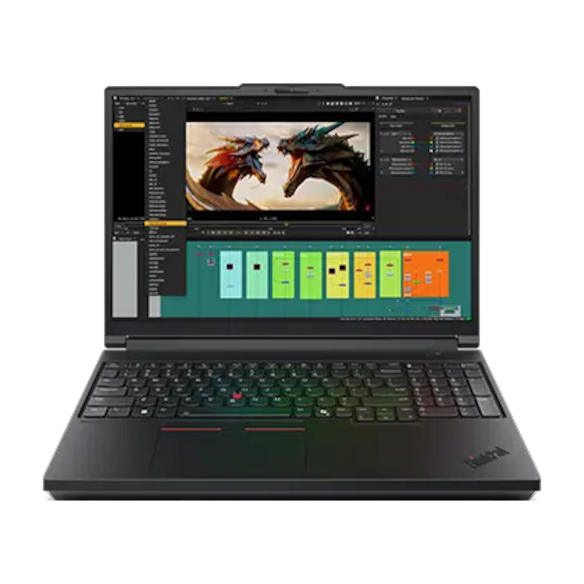
Best Desktop Computer for CAD Design Software Work
Disclosure: this page may include affiliate links. If you buy through those links, Mechanitec may earn a commission at no extra cost to you.
The best desktop computer for CAD depends on the work you actually do. A student running light 2D AutoCAD does not need the same workstation as a mechanical designer opening large SolidWorks assemblies, running simulations, or keeping several engineering programs open all day.
For the display side of a 2D drafting desk, our best monitor for AutoCAD guide compares 27-inch and 32-inch 4K monitors, USB-C docking, and ergonomic setup choices.
For a new CAD desktop in 2026, the practical starting point is a modern Windows 11 workstation with a fast CPU, 32 GB of RAM, a 1 TB NVMe SSD, and graphics that match your software. If SolidWorks is your main tool, a certified workstation GPU and supported driver are worth prioritizing because they reduce graphics, stability, and support risk.
If portability matters more than desktop expandability, compare these workstation choices with the best laptop for SolidWorks options before buying.
For lighter drafting and layout work, a laptop for AutoCAD may be a better fit than a full desktop workstation, especially if you move between home, office, school, or job sites.
This guide focuses on current workstation buying logic, not old component names. Some older CAD desktop recommendations still point readers toward retired processors, withdrawn workstation towers, discontinued workstation lines, or previous-generation graphics branding. Those are no longer the right anchors for a modern CAD buying guide.
Quick Picks by CAD Workload
| CAD workload | Good starting spec | Best fit | Current example |
|---|---|---|---|
| 2D AutoCAD and basic drafting | Modern Core or Ryzen CPU, 16-32 GB RAM, SSD storage, modest dedicated or strong integrated graphics | Users who mainly draft, review drawings, and work with smaller files | |
| General SolidWorks modeling | High-clock CPU, 32 GB RAM, NVMe SSD, certified workstation GPU | Mechanical design, parts, drawings, and moderate assemblies | |
| General CAD workstation with room to grow | Fast workstation CPU, 32-64 GB RAM, 1 TB SSD, professional NVIDIA graphics option | Designers who want a balanced professional workstation tower | |
| Large assemblies and heavier multitasking | Fast CPU, 64 GB RAM, larger NVMe SSD, stronger certified GPU | Users working with bigger assemblies, imports, and several apps at once | |
| Simulation, rendering, and engineering analysis | More CPU cores, 64-128 GB RAM, workstation-class GPU, strong cooling and power delivery | Users running SolidWorks Simulation, Flow Simulation, rendering, or long compute jobs | |
| Small desk or compact workstation | Compact workstation, 32 GB RAM when possible, SSD, professional low-profile graphics option | Users who need a cleaner desk but still want workstation-class hardware |
Current CAD Desktop Examples
Dell Precision 3460 Small Form Factor
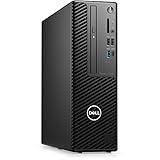
The Dell Precision 3460 Small Form Factor is the type of machine to consider when desk space matters and the workload is not extremely heavy. It is a better fit for 2D drafting, light 3D review, office CAD support, students, estimators, and users who need a professional desktop without a large tower.
The key limitation is expansion. Small form factor workstations usually have less room for high-power graphics, multiple drives, and future upgrades. That is acceptable if the work is light and predictable. It is not the best choice for large assemblies, serious simulation, or GPU-heavy rendering.
Choose this class if you need a compact professional PC and your CAD files are modest. If you expect your projects to grow, start with a full tower instead.
Dell Precision 3680 Tower
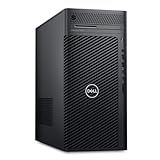
The Dell Precision 3680 Tower is a strong example of a current mainstream CAD workstation. Dell positions the Precision 3680 with modern Intel Core options, including high-clock i7 and i9 processors. That matters because many everyday CAD operations still benefit from strong single-thread performance.
This is a practical fit for general SolidWorks, Inventor, AutoCAD, Fusion, Revit, and mixed engineering work. It gives you more room than a small form factor machine for workstation graphics, storage, memory, and cooling. For most professional users, that balance is more useful than chasing the most expensive dual-CPU or high-core-count workstation.
Choose this class if CAD pays the bills and you want a current tower with workstation support, driver availability, and upgrade room. Pair it with at least 32 GB RAM for general work and consider 64 GB if large assemblies, imported geometry, or heavy multitasking are normal.
HP Z2 Tower G1i
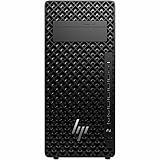
The HP Z2 Tower G1i is a current professional workstation tower aimed at modeling, simulation, rendering, and upgradeable professional workflows. It is the type of CAD desktop to compare when you want a workstation brand, modern CPU options, professional graphics options, and a system built for business support rather than gaming aesthetics.
For CAD users, the useful point is balance. A Z2-class tower can be configured for general modeling without becoming an oversized high-end workstation. It can also be upgraded as work changes, which matters if you start with moderate SolidWorks assemblies and later move into bigger imported files, visualization, or simulation.
Choose this class if you want a mainstream professional tower from a major workstation vendor. Check the exact CPU, RAM, SSD, and GPU configuration before buying because the model name alone does not tell the whole story.
Lenovo ThinkStation P3 Tower
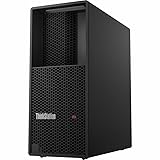
The Lenovo ThinkStation P3 Tower is another good current reference point for an entry-to-mainstream professional workstation. Lenovo positions the P3 Tower as workstation power at a desktop price, which makes it relevant for CAD users who want a professional tower without jumping straight to high-end workstation pricing.
This class is useful for general engineering offices, students moving into professional work, small design teams, and CAD users who want a stable workstation line with room for professional graphics. It is also a better long-term choice than buying an old withdrawn workstation model just because the used price looks attractive.
Choose this class if you want a practical workstation tower with current support and expansion. Avoid treating every P3 configuration as equal. A low-RAM, low-GPU configuration is not the same workstation as a 64 GB model with a stronger professional GPU.
HP Z4 G5 Workstation
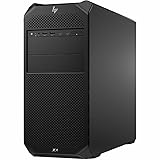
The HP Z4 G5 class is for users who need more workstation headroom than an entry tower. It makes more sense when the work includes larger assemblies, more demanding simulation, heavier rendering, more memory, and more expansion. This is not the first place a light CAD user should spend money, but it can be appropriate when downtime and rebuild time cost more than the hardware.
Look closely at the exact configuration. Xeon workstation platforms can offer expandability, ECC memory support depending on configuration, and professional GPU options, but a weak GPU or too little RAM can still hold back the system. For heavy CAD and engineering work, the build needs to be balanced.
Choose this class when your workload is clearly beyond normal part modeling and moderate assemblies. If you mostly draft in 2D or model simple parts, buy a smaller workstation and put the savings into monitors, storage, backup, and comfortable input devices.
For that display part of the setup, the SolidWorks monitor guide compares practical 4K monitor options for CAD desks, laptop docks, and long drawing sessions.
HP Z2 Mini G9 Workstation
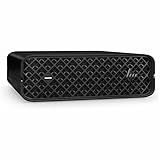
The HP Z2 Mini G9 is a compact workstation option for people who want a cleaner desk, a small footprint, or a workstation that can sit behind a monitor. It is not the same as a full tower, but it can be useful when space matters and the CAD workload is moderate.
Mini workstations require more caution than towers. Cooling, graphics options, upgrade space, and acoustics are more constrained. That does not make them bad. It means you should buy them for the right reason: space efficiency with professional hardware, not maximum expandability.
Choose this class for smaller CAD offices, teaching spaces, light-to-moderate modeling, and workstations where physical space matters. If you run large assemblies, simulations, or long render jobs, a tower is usually easier to cool, configure, and upgrade.
What Matters Most in a CAD Desktop
CPU
For day-to-day CAD modeling, CPU speed still matters more than chasing the highest core count. Opening files, rebuilding models, rotating assemblies, editing sketches, and working in drawings often benefit from strong single-thread performance. More cores become more important when you run simulation, rendering, or other compute-heavy tasks.
That is why workstation recommendations can look different from gaming PC recommendations. A huge core count is not automatically better for normal CAD modeling. A fast, modern CPU with strong boost clocks and good cooling can feel better in everyday SolidWorks than a slower many-core chip that only shines in heavily threaded workloads.
RAM
For a new professional CAD desktop, 32 GB is the safer baseline. SolidWorks lists 16 GB as the minimum and 32 GB as recommended, but real work often includes Windows, browsers, Excel, reference PDFs, PDM tools, email, and other engineering software running at the same time.
Choose 64 GB if you handle large assemblies, imported geometry, simulation, point clouds, or heavy multitasking. Choose 128 GB only when the workload clearly needs it. RAM is usually easier to justify than an oversized graphics card because running out of memory can make the whole workstation feel unstable.
Graphics card
A gaming graphics card can run some CAD workloads, but a workstation-class GPU is easier to recommend for professional SolidWorks use. Certified graphics cards and drivers are tested for CAD behavior, not just game frame rates, and they can matter for viewport stability, RealView-style features, visual artifacts, and vendor support.
Do not buy previous-generation workstation graphics just because older articles recommend them. NVIDIA’s current workstation naming has moved on, and modern RTX / RTX PRO workstation graphics are the direction to compare. The right GPU depends on assembly size, display resolution, visualization needs, and certification requirements.
Storage
Choose an NVMe SSD instead of a hard drive. CAD work benefits from faster file open, save, temporary files, local project folders, and PDM cache performance. A 1 TB SSD is a practical starting point. Move to 2 TB or more if you keep large project archives, scan data, render files, or local workspaces on the machine.
Do not ignore backup. A fast workstation is not useful if project files are only stored locally and the drive fails. CAD users should have a clear backup or PDM workflow before spending extra money on small performance upgrades.
How to Choose by Workload
2D drafting and light CAD
If your work is mostly AutoCAD drafting, PDF review, simple part changes, and office tasks, you do not need an oversized workstation. A current business desktop or compact workstation with 16-32 GB RAM and SSD storage can be enough. Spend money on a good monitor, mouse, keyboard, and backup setup before buying a high-end simulation tower.
General SolidWorks and mechanical design
For general SolidWorks, prioritize a fast CPU, 32 GB RAM, NVMe storage, and certified graphics if the workstation is used professionally. This is where mainstream towers such as Dell Precision 3680, HP Z2 Tower, and Lenovo ThinkStation P3 make sense. They are not exotic, but they match the work most CAD users actually do.
Large assemblies
Large assemblies change the buying decision. More RAM becomes important, storage speed matters, graphics reliability matters, and cooling matters. A workstation that looks fine for small parts can become frustrating when a design team starts opening vendor models, plant layouts, imported STEP files, or complex top-level assemblies.
Simulation and rendering
Simulation and rendering are the clearest reasons to buy more CPU cores, more RAM, and stronger workstation graphics. If those workloads are occasional, do not build the whole workstation around them. If they are daily work, buy for sustained performance, cooling, and expandability rather than only high boost-clock marketing numbers.
Suggested CAD Desktop Spec Tiers
Entry CAD desktop
An entry CAD desktop is for learning, 2D drafting, light part modeling, office CAD review, and occasional drawing updates. A reasonable starting point is a modern Core i5, Core i7, Ryzen 5, or Ryzen 7 class CPU, 16-32 GB RAM, a 512 GB or 1 TB SSD, and graphics that match the software. This tier should not be framed as a heavy SolidWorks workstation, but it can be practical for users whose files are small.
The mistake in this tier is buying too old. A cheap retired workstation can look strong because it once had a professional label, but older CPU speed, weak SSDs, old graphics drivers, and limited Windows 11 support can erase the savings. For light work, a current modest workstation is often better than an old high-end one.
Mainstream professional CAD workstation
This is the best starting tier for most paid CAD work. Look for a fast current CPU, 32 GB RAM minimum, 1 TB NVMe SSD, Windows 11 Pro, and a certified professional GPU if SolidWorks reliability matters. This tier should feel responsive in parts, moderate assemblies, drawings, and normal multitasking.
Mainstream workstation towers are also easier to support. Dell Precision, HP Z, and Lenovo ThinkStation systems have business support paths, driver pages, and workstation configuration options. That matters when the computer is not just a hobby machine. If one day of downtime costs more than the workstation price difference, support and certification are part of the buying decision.
Large assembly workstation
A large assembly workstation needs more than a fast processor. Choose 64 GB RAM as a practical starting point, consider 128 GB when assemblies or imported datasets are consistently large, and make sure storage has enough room for active projects, local caches, exports, and backups. GPU choice should be based on viewport complexity and certified-driver needs, not gaming benchmarks alone.
Large assemblies also punish weak workflow habits. Hardware helps, but so do simplified configurations, lightweight modes, display states, file organization, and clean references. If you regularly fight assembly performance, pair the hardware upgrade with SolidWorks performance articles such as SolidWorks large assembly mode and common reasons SolidWorks runs slow.
Simulation and rendering workstation
Simulation and rendering are where it becomes easier to justify more cores, more memory, stronger graphics, and better cooling. A workstation used for long compute jobs should be judged by sustained performance, not only short boost clocks. Pay attention to thermals, power supply quality, chassis airflow, and whether the system can stay stable under long loads.
This tier can be expensive, so define the workload before buying. SolidWorks Simulation, Flow Simulation, rendering, FEA preprocessing, and visualization do not all stress the same components equally. If simulation is occasional, a mainstream workstation may be enough. If it is daily billable work, a larger workstation class can pay for itself by reducing wait time and rework.
What Not to Buy for CAD in 2026
Avoid old buyer-guide recommendations that mention retired CPUs, withdrawn workstations, discontinued Apple workstation lines, or previous-generation GPU names as if they are still the default choice. Those products may still appear used or renewed, but that does not make them the best CAD workstation purchase today.
Also avoid underconfigured new machines. A current workstation with only 16 GB RAM and weak graphics may carry the right brand but still be a poor fit for professional CAD. The configuration matters more than the name printed on the case. When comparing prices, check the exact CPU, RAM, SSD, GPU, warranty, and operating system.
Finally, avoid building the whole purchase around a single spec. CAD performance is a system problem. CPU speed, RAM capacity, graphics stability, storage speed, cooling, monitor setup, backups, and input devices all affect the experience. A balanced workstation usually beats an unbalanced machine with one impressive component.
Buying Advice Before You Compare Prices
Compare current prices only after you define the workload. A cheap old workstation can look attractive, but old CPUs, old GPUs, limited Windows 11 support, withdrawn product lines, and missing driver support can make it a poor CAD purchase. Buying a current workstation class is often safer than buying a once-expensive workstation that is now outdated.
Do not compare desktops only by processor name. Check RAM, storage, GPU, operating system, warranty, power supply, cooling, and upgrade room. Two systems with the same workstation brand can behave very differently if one has integrated graphics and 16 GB RAM while another has a certified GPU and 64 GB RAM.
If you choose a workstation specifically for SolidWorks, check the SolidWorks hardware certification database before buying. Also review the current SolidWorks system requirements for RAM, processor, graphics, and SSD guidance.
For more detailed workstation component reasoning, Puget Systems’ SolidWorks hardware recommendations are useful because they separate general modeling from simulation and rendering. Vendor pages from Dell Precision, HP Z workstations, and Lenovo ThinkStation are also worth checking for current configurations.
Related CAD Workstation Setup
The desktop is only one part of a productive workstation. Pair the computer with the best mouse for CAD, a practical CAD keyboard, and a monitor setup that gives drawings and model windows enough space. If you are still learning SolidWorks input habits, the SolidWorks mouse settings guide and SolidWorks keyboard shortcuts guide can help you get more out of the hardware.
For two-hand model navigation at a fixed workstation, also compare a SpaceMouse for SolidWorks with your normal mouse and keyboard setup.
If your CAD work feeds fabrication or quoting, also keep calculation tools close. Mechanitec’s press brake tonnage calculator and SolidWorks articles can support the same workflow after the workstation is chosen. If graphics features or diagnostics are part of the issue, see how to enable RealView graphics in SolidWorks and how to use the SolidWorks RX tool.
FAQ
How much RAM do I need for CAD?
For a new CAD desktop, 32 GB is the practical baseline for professional work. Use 64 GB for large assemblies, imported geometry, simulation, point clouds, or heavy multitasking. Light 2D drafting can still work with less, but 32 GB gives more breathing room.
Is a gaming PC good for CAD?
A gaming PC can run some CAD software, but it may not be the safest professional choice. Workstation desktops usually offer better driver support, certified graphics options, business service options, and a configuration path built for engineering work rather than gaming.
Do I need a workstation GPU for SolidWorks?
For professional SolidWorks use, a certified workstation GPU is easier to recommend. It can reduce graphics and support risk. For learning, light models, or occasional use, a non-certified GPU may work, but it is not the lowest-risk choice for a paid production workstation.
Should I buy a used workstation for CAD?
A used workstation can be reasonable if the price is low and the specs are still current enough for your software. Be careful with withdrawn models, old CPUs, previous-generation workstation graphics, unsupported drivers, weak SSDs, and Windows 11 compatibility. A current entry workstation can be better than an old high-end machine.
What is the best CAD desktop for most SolidWorks users?
Most SolidWorks users should start with a current mainstream workstation tower: fast CPU, 32-64 GB RAM, NVMe SSD, and certified workstation graphics. Dell Precision 3680, HP Z2 Tower, and Lenovo ThinkStation P3 are examples of the class to compare. The exact configuration matters more than the brand name alone.
Final Recommendation
Start with the CAD workload, then choose the workstation class. Use a compact workstation for light work and small desks, a mainstream professional tower for general SolidWorks and AutoCAD, and a larger workstation for simulation, rendering, or large assemblies. Avoid old discontinued product recommendations, check current configurations, and buy the machine that reduces real workflow risk rather than the one with the loudest spec sheet.