Best Mouse for SolidWorks and CAD
Contents
Disclosure: this page may include affiliate links. If you buy through those links, Mechanitec may earn a commission at no extra cost to you.
The best mouse for CAD is not always the mouse with the highest DPI or the longest feature list. For SolidWorks, AutoCAD, Inventor, Fusion, Rhino, Revit, and similar tools, the real priorities are middle-click comfort, reliable pan and zoom behavior, programmable buttons that you will actually use, hand comfort during long sessions, and software profiles that do not get in the way.
If you spend most of the day rotating models in SolidWorks, a dedicated CAD mouse with a true middle button can be more useful than a gaming mouse with a long spec sheet. If you split your day between CAD, spreadsheets, email, PDFs, and documentation, a productivity mouse may be the better fit. If you want faster command access, programmable buttons matter more than RGB lighting.
This guide is written for people who actually work in CAD instead of shopping from a gaming spec sheet. It focuses on how each device fits a workstation: where your hand rests, how often you press the middle button, whether you need a second 3D navigation device, and how much desk space remains beside the keyboard.
Quick Picks by CAD Workflow
| CAD workflow | Best type of mouse | Why it helps | Watch out for |
|---|---|---|---|
| Full-time SolidWorks or CAD modeling | Dedicated CAD mouse | A true middle button and CAD-focused controls can make orbit, pan, zoom, and radial-menu workflows more comfortable. | Higher price and fewer shortcut buttons than some programmable gaming mice. |
| CAD plus office productivity | Productivity mouse | Comfortable shape, horizontal scrolling, app profiles, and fast document navigation are useful when CAD is only part of the day. | The wheel-click feel may not suit users who orbit models all day. |
| Shortcut-heavy CAD workflow | Programmable shortcut mouse | Extra buttons can be mapped to Escape, Enter, Normal To, Rebuild, view commands, or the SolidWorks shortcut bar. | Gaming-style software and accidental DPI/button presses can get annoying if not configured carefully. |
| Large assemblies and model review | 3D navigation device | A SpaceMouse-style device can give your non-mouse hand continuous pan, zoom, and rotate control while your main mouse selects geometry. | It is an add-on, not a replacement for a normal mouse. |
| Limited desk movement or different hand posture | Trackball or ergonomic alternative | Alternative control styles can suit some desks and users better than a standard mouse. | Fit is personal, and precise CAD navigation can feel slower at first. |
Product Comparison
If you specifically want a left-hand 3D navigation controller for rotating, panning, and zooming models beside your normal mouse, use our best SpaceMouse for SolidWorks guide instead.
Use these links as starting points for comparing current options. Availability and exact models can change, so check the current listing details before buying.
| Product | Best fit | Primary reason to consider it | Amazon link |
|---|---|---|---|
| 3Dconnexion CadMouse Compact Wireless | All-day SolidWorks, AutoCAD, Inventor, Fusion, and 3D model navigation | CAD-focused shape with a true middle button. | |
| Logitech MX Master 4 | CAD plus Excel, PDFs, email, quoting, and documentation | Comfortable productivity mouse with horizontal scrolling and app profiles. | |
| Logitech G502 X | Users who map repeated CAD commands to mouse buttons | Familiar programmable layout with enough buttons for common CAD commands. | |
| 3Dconnexion SpaceMouse Compact | Large assemblies, model review, and two-handed 3D navigation | Dedicated 3D navigation controller for the non-mouse hand. | |
| Logitech MX Ergo S | Crowded desks or users who prefer an alternative control style | Trackball control that keeps the device fixed in place. |
Recommended CAD Mouse Picks
3Dconnexion CadMouse Compact Wireless
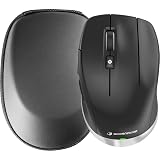
The 3Dconnexion CadMouse Compact Wireless is the most direct choice when the main problem is CAD navigation comfort. Its biggest advantage is not a marketing DPI number. The useful difference is the dedicated middle button, which matters in SolidWorks because rotation, pan, and view control often depend on middle-click behavior.
This is the mouse to consider first if you model for long stretches, work in assemblies, edit sketches, jump between drawings and parts, or constantly press the mouse wheel on a normal office mouse. A true middle button can reduce the awkward wheel-click pressure that makes some standard mice tiring in CAD.
The compact wireless format also suits desks with a keyboard, separate numpad, notebook, or SpaceMouse. If you want a larger hand-filling shape, compare it with other CadMouse variants, but keep the same buying logic: prioritize the middle button, CAD profile support, and hand comfort before small spec differences.
Logitech MX Master 4
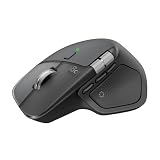
The Logitech MX Master 4 is the better pick for a mixed engineering desk where CAD is important but not the only work. Many engineers spend the day moving between SolidWorks, Excel, PDFs, email, ERP screens, web research, BOM review, and file management. In that environment, the mouse has to be good at more than orbiting a model.
The MX Master shape, thumb controls, fast scrolling, and horizontal scroll wheel are useful for long drawings, spreadsheets, timelines, and documentation. App-specific profiles can also be helpful if you map a few simple commands for CAD while keeping different actions for browsers and office tools.
The main caution is middle-click feel. If you rotate SolidWorks models all day, test whether you like the wheel click before treating this as a dedicated CAD mouse replacement. If CAD is one part of a broader workstation workflow, it is one of the most practical all-around choices.
Logitech G502 X
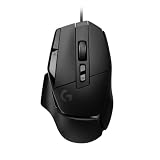
The Logitech G502 X is a strong option when you want more programmable buttons without buying a niche CAD mouse. For CAD work, those buttons should be treated as command shortcuts, not gaming decorations. Useful mappings can include Escape, Enter, Normal To, Rebuild, Measure, Isolate, Section View, or the SolidWorks shortcut bar.
This mouse makes the most sense for users who enjoy tuning their setup and building muscle memory. If you already know which commands slow you down, a programmable mouse can reduce keyboard reaches and make repeated operations faster. It can also be useful for AutoCAD users who repeat navigation, selection, and command entry all day.
The risk is overconfiguration. Too many buttons can become noise if every profile is different or if accidental clicks interrupt modeling. Start with two or three high-value commands, use the mouse for a week, then add more only when the need is obvious.
3Dconnexion SpaceMouse Compact
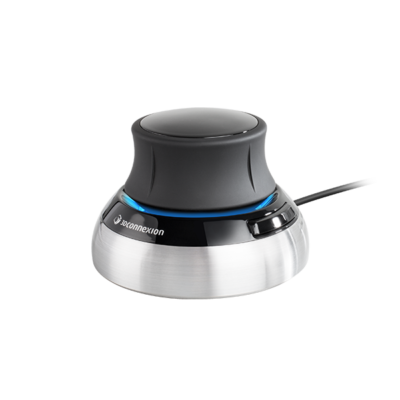
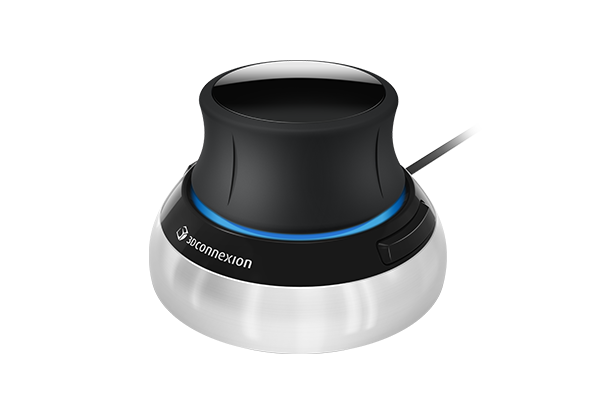
The SpaceMouse Compact is different from the other picks because it is not a normal pointer replacement. It is a 3D navigation device that sits under your non-mouse hand. Your regular mouse still selects edges, faces, dimensions, sketches, menus, and drawing entities while the SpaceMouse handles model movement.
This two-handed workflow can feel natural for large assemblies, design review, clearance checking, and presentations where you need smooth pan, zoom, and rotate control. It is especially useful when model navigation interrupts selection work. Instead of selecting geometry, rotating, selecting again, and constantly resetting the view, your left hand can manage the model while your right hand keeps working.
It is not necessary for every CAD user. If most of your work is 2D drawings, quick edits, or occasional CAD viewing, a better primary mouse may matter more. If you live in 3D assemblies, it can be one of the most noticeable workstation upgrades.
Logitech MX Ergo S

The Logitech MX Ergo S is for users who want a different control style, not for people chasing a universal CAD upgrade. A trackball stays fixed on the desk while your thumb moves the pointer. That can help on crowded desks, in tight workstation layouts, or when you want less arm movement during long sessions.
For CAD, the adjustment period is real. Precise sketch selection, small handles, drawing annotations, and edge picking may feel slower until you adapt. Users who already like trackballs may appreciate the stable desk footprint and ergonomic angle, but users who have never used one should not assume it will instantly improve modeling speed.
Choose it if a normal mouse feels uncomfortable or if desk space is the problem. Avoid it if you need the fastest possible transition from a standard mouse or if your main pain point is SolidWorks middle-click behavior.
How to Choose a CAD Mouse
Prioritize middle-click comfort
In SolidWorks and many other CAD programs, the middle mouse button is central to rotating and navigating models. A poor wheel click can make the entire CAD experience feel worse. If you model all day, middle-click feel matters more than a high advertised DPI number.
Extra buttons are valuable only when they remove real friction. Good CAD mappings include Escape, Enter, Normal To, Rebuild, Measure, view orientation, the shortcut bar, and commands you repeat dozens of times per day. If you never configure the software, a simpler mouse may be better.
Treat a 3D mouse as a companion device
A SpaceMouse-style controller can be excellent for 3D navigation, but most users still need a good primary mouse for selection, sketching, menus, dimensions, and normal computer work. 3Dconnexion’s own SpaceMouse information is useful if you want to understand the category before deciding whether it belongs on your desk.
Wired or Wireless
A wired mouse avoids charging and can be a good fit for a fixed CAD workstation. A wireless mouse keeps the desk cleaner and is easier to move between a desktop, laptop, or meeting room. For most modern CAD work, either can work well if the connection is reliable and the shape fits your hand.
Do not overvalue DPI
High DPI is easy to market, but CAD work usually benefits more from control, comfort, button placement, and profile reliability. Most CAD users do not need extreme DPI settings to draw accurately. Logitech’s MX Master 4 product page is a useful example of a productivity mouse described around workflow features rather than CAD-only positioning.
Match the mouse to your daily workflow
A full-time CAD designer, student, drafter, estimator, and engineer who spends half the day in spreadsheets may need different mice. Start with the work you do most often, then choose the device that reduces repeated friction.
After choosing a mouse, set it up properly. See the SolidWorks mouse settings guide for mouse gestures, middle-button behavior, shortcut bars, and troubleshooting.
CAD Mouse Setup Examples
Full-time SolidWorks designer
A full-time SolidWorks designer should start with middle-click comfort and model navigation. If you spend most of the day opening parts, editing sketches, rotating assemblies, placing mates, and checking drawings, a dedicated CAD mouse or a primary mouse plus SpaceMouse setup is usually more important than a long list of gaming features.
For this user, a good setup might be a CadMouse-style primary mouse, a SpaceMouse Compact on the non-mouse side, and only a few mapped shortcuts. Normal To, Measure, Section View, Escape, and Rebuild are often more useful than trying to map every command. The goal is to reduce repeated strain, not to turn the mouse into a confusing command panel.
AutoCAD drafter or 2D-heavy user
An AutoCAD drafter may not need a 3D navigation device. The better priority is a comfortable pointer with reliable scrolling, predictable wheel behavior, and a few buttons for repeated commands. If your work is mostly 2D drawings, dimensions, annotations, layers, blocks, and layouts, smooth document navigation can matter more than specialized 3D rotation.
If you are building a portable drafting setup, choose the AutoCAD laptop first, then match the mouse to the screen size, docking setup, and desk space you actually use.
If the drawing display is the limiting part of that setup, start with an AutoCAD monitor that makes linework, dimensions, and palettes easier to read during long drafting sessions.
In this workflow, a productivity mouse or programmable shortcut mouse can make sense. Horizontal scrolling can be useful for wide drawings, and extra buttons can be mapped to common commands. A dedicated CAD mouse can still work well, but the value depends on how much you use middle-click pan and whether the shape feels better than your current mouse.
Engineer who does CAD plus office work
Many engineers do not spend the entire day inside CAD. They review models, then move to Excel, drawings, email, quotes, PDFs, vendor pages, file folders, and project documentation. For that mixed day, a general productivity mouse can be the most practical choice because the same device helps in many programs.
This user should look for comfort, fast scrolling, horizontal scroll, battery life, and simple app profiles. A few CAD shortcuts are enough. If the mouse is too specialized for CAD but uncomfortable in spreadsheets and documents, it may slow down the rest of the day.
Student or occasional CAD user
A student or occasional CAD user should not overspend before knowing which features matter. A reliable mouse with a comfortable wheel, good shape, and basic programmable buttons is enough for learning SolidWorks, AutoCAD, Fusion, or Inventor. Put more of the budget into a capable computer, monitor, or learning resources if the current mouse is already usable.
If the display is the weak point instead of the mouse, start with a clear SolidWorks monitor buying guide before adding more input devices to the desk.
Upgrade when you can describe the problem clearly. If the wheel click hurts, look at a dedicated CAD mouse. If repeated commands slow you down, look at a programmable mouse. If large 3D models are hard to navigate, consider a SpaceMouse-style device. Buying from a specific pain point usually works better than buying from a generic best-products list.
Common CAD Mouse Mistakes
Buying only by DPI
DPI is one of the easiest numbers to market and one of the least useful ways to choose a CAD mouse. CAD work needs predictable control. Extremely high DPI can actually make precise selection feel twitchy if it is not tuned well. Comfort, button placement, scroll behavior, middle-click feel, and software stability usually matter more.
Mapping too many commands at once
A programmable mouse can help, but too many mappings can slow you down. Start with commands you already use constantly. Escape is often a good first mapping because it ends commands and clears selections. Normal To, Rebuild, Measure, and the shortcut bar can also be practical. If you cannot remember a mapping after a week, remove it.
Ignoring the keyboard and desk layout
The best mouse can still feel bad if a wide keyboard pushes it too far away. Shoulder position matters during long CAD sessions. If the mouse sits outside a comfortable reach, consider a narrower keyboard, a detached numpad, or a different desk layout. The mouse, keyboard, and SpaceMouse need to work together as one workstation.
Assuming ergonomic means better for everyone
Trackballs, vertical mice, and unusual shapes can be excellent for some users and frustrating for others. CAD involves precise selection, middle-click navigation, and small interface targets. If you are switching to a very different control style, expect a learning period. The right ergonomic choice is the one that improves your actual work after the adjustment period.
What To Check Before Buying
- Middle-click behavior: check whether the wheel or button feels comfortable for repeated model rotation and pan.
- Button placement: make sure thumb buttons are easy to reach without shifting your grip.
- Software profiles: confirm the mouse can store or switch settings for the CAD tools you use.
- Desk space: think about keyboard width, mouse pad area, notebook placement, and whether a SpaceMouse will share the desk.
- Hand size and grip: a mouse that is excellent for one user can feel wrong for another if the shape does not fit.
- Wired versus wireless: choose wired for a fixed, no-maintenance workstation or wireless if a cleaner desk and laptop movement matter.
Final Buying Checklist
Before buying, write down the three actions you repeat most often with your current mouse. For one user, that might be rotating SolidWorks assemblies, pressing Escape, and zooming into drawing details. For another, it might be switching browser tabs, scrolling PDFs, and entering spreadsheet data. That short list makes the buying decision clearer than comparing every specification.
If the repeated action is navigation, choose the device with the best middle-click and model-control feel. If the repeated action is command entry, choose the device with useful programmable buttons and reliable software. If the repeated action is switching between CAD and office work, choose the mouse that feels best across the whole desk, not just inside one program.
Also think about what you will not configure. A mouse with ten extra controls is not useful if you will leave the software at factory defaults. A simpler mouse that you set up well can outperform a complex mouse that never becomes part of your routine. For CAD work, the best upgrade is the one that removes a daily annoyance you can already name.
How To Compare Current Prices Without Overbuying
Prices change often, especially for productivity mice and older CAD accessories. Compare the current price against the problem you are trying to solve. Paying more can make sense for a true middle button, a more comfortable shape, or a device that improves daily assembly navigation. It makes less sense to pay extra for lighting, extreme DPI, or features that will stay unused.
If two mice are close in price, choose by workflow fit. The dedicated CAD mouse is usually the better fit for long SolidWorks navigation. The productivity mouse is usually the better fit for mixed CAD and office work. The programmable mouse is best when you know which shortcuts you will map. The SpaceMouse is best when large 3D model movement is the bottleneck. The trackball is best when desk movement or posture is the problem.
If the price gap is large, start with the lower-risk option and upgrade later when the limitation becomes obvious. A student or occasional CAD user can learn with a reliable programmable mouse. A full-time designer who already knows middle-click comfort is the pain point should not waste time on a device that repeats the same problem. The right purchase depends on the cost of the problem, not just the cost of the mouse.
Related CAD Workstation Guides
A mouse works best when the rest of the workstation supports it. If you are building a complete desk setup, compare this guide with the best keyboard for CAD, the CAD workstation desktop guide, and the SolidWorks mouse gestures guide. If mouse behavior is part of a larger interface issue, the SolidWorks cursor filter guide and press brake tonnage calculator can also be useful next steps for troubleshooting and shop planning.
FAQ
Is a gaming mouse good for CAD?
A gaming mouse can be good for CAD if it has comfortable buttons, reliable software, and programmable controls you will actually use. It should not be chosen only for RGB lighting, extreme DPI, or gaming branding.
Is a 3D mouse the same as a normal CAD mouse?
No. A 3D mouse or SpaceMouse is usually a second device for model navigation. You still use a normal mouse for selecting geometry, clicking menus, editing sketches, and general computer work.
Do I need a special mouse for AutoCAD?
Not always. Many AutoCAD users are fine with a reliable productivity mouse. A dedicated CAD mouse or programmable mouse becomes more useful when you spend long hours navigating drawings, repeating commands, or moving between 2D and 3D work.
Is a trackball good for CAD?
A trackball can work for CAD if you like the control style and want the device to stay in one place. It is not automatically better than a standard mouse, and it may take time to adapt for precise selection and model navigation.
What is the best mouse setup for SolidWorks?
For many SolidWorks users, the best setup is a comfortable primary mouse with reliable middle-click behavior, a few mapped shortcuts, and optionally a SpaceMouse for 3D navigation. The exact device matters less than whether pan, zoom, rotate, selection, and repeated commands feel natural after a full day of work.
Final Recommendation
For most CAD users, start with the workflow rather than the brand. Choose a dedicated CAD mouse for all-day modeling, a productivity mouse for mixed engineering work, a programmable mouse for shortcut-heavy command entry, a SpaceMouse-style device for 3D navigation, or a trackball if the shape fits your desk and habits better.